
Spending time outside isn’t just “nice to have,” it’s genuinely good for us. Did you know that access to nearby green spaces is linked to better mental health, lower stress, and more physical activity for people of all ages? When your local park is thoughtfully planned, it quietly supports a healthier, happier daily life.
This is where smart, people-focused community park design ideas really matter. In this guide, we’ll walk through 10 practical design concepts and show you how MegaChess can help turn an ordinary patch of grass into a true community hub.
The Importance of Planning Parks With Real People in Mind
Creating welcoming parks starts with listening. Instead of designing from a desk, planners who build meetings, surveys, and workshops into the process get a clearer picture of what residents actually need: safe play for kids, quiet corners for older adults, dog-friendly areas, or places for teens to hang out. This kind of planning treats community parks as something built with the neighborhood, not just for it.
10 Community Park Design Ideas That Bring People Together
A strong park layout balances play, rest, learning, and social connection. From inclusive playgrounds to open lawns and giant chess boards, each concept can be mixed and matched to fit your site, budget, and local priorities.
Inclusive Play Areas
Inclusive play areas allow children of different ages and abilities to play together in the same space using features like ramps, sensory panels, and ground-level activities. Clear sightlines and nearby seating help caregivers stay connected while kids play. The result is a welcoming area where families naturally gather and stay longer.
Dedicated Dog Zones

Dedicated dog zones give pets a safe, fenced space for off-leash play without disrupting other park users. Features like separate areas for large and small dogs, shade, water, and waste stations keep the space clean and manageable. This setup makes the entire park more comfortable for both dog owners and non-dog owners.
Multi-Use Sports Fields
Multi-use sports fields maximize space by supporting different activities throughout the day and across seasons. With simple line changes and flexible equipment, one field can serve schools, leagues, and casual users alike. Seating, paths, and shade around the perimeter let others watch, relax, or stay active nearby.
Walking and Loop Paths
Loop paths encourage daily movement for all ages, from stroller walks to wheelchair-friendly social laps. Connecting key areas such as playgrounds, fields, and seating helps unify the park's layout. Distance markers or fitness stations can easily turn a simple path into a wellness feature.
Shaded Seating Spaces
Shaded seating keeps people comfortable and encourages longer visits. Placing benches and tables near active areas and quieter corners supports a range of uses throughout the park. Accessible seating with firm surfaces and back support helps ensure everyone can relax comfortably.
Community Gathering Pavilions

Pavilions create flexible spaces for events, meetings, and casual gatherings. When placed near paths, play areas, and restrooms, they support a wide range of community activities. Simple reservation rules help keep these shared spaces fair and easy to use.
Water Play Features
Water play features like splash pads or misting zones offer cooling relief without the complexity of pools. Thoughtful details such as non-slip surfaces, shade, and drainage improve safety and comfort. Even small fountains can add a calming atmosphere to busy park settings.
Open Lawn Event Areas
Open lawns provide adaptable space for events, recreation, and everyday relaxation. Their simplicity makes them easy to maintain while remaining flexible for future needs. Framing the lawn with seating or trees helps define the space without limiting visibility.
Interactive Art Elements
Interactive art adds personality and encourages engagement across age groups. Murals, musical features, or sculptural seating reflect local culture and invite exploration. When the community helps create them, these elements become shared points of pride.
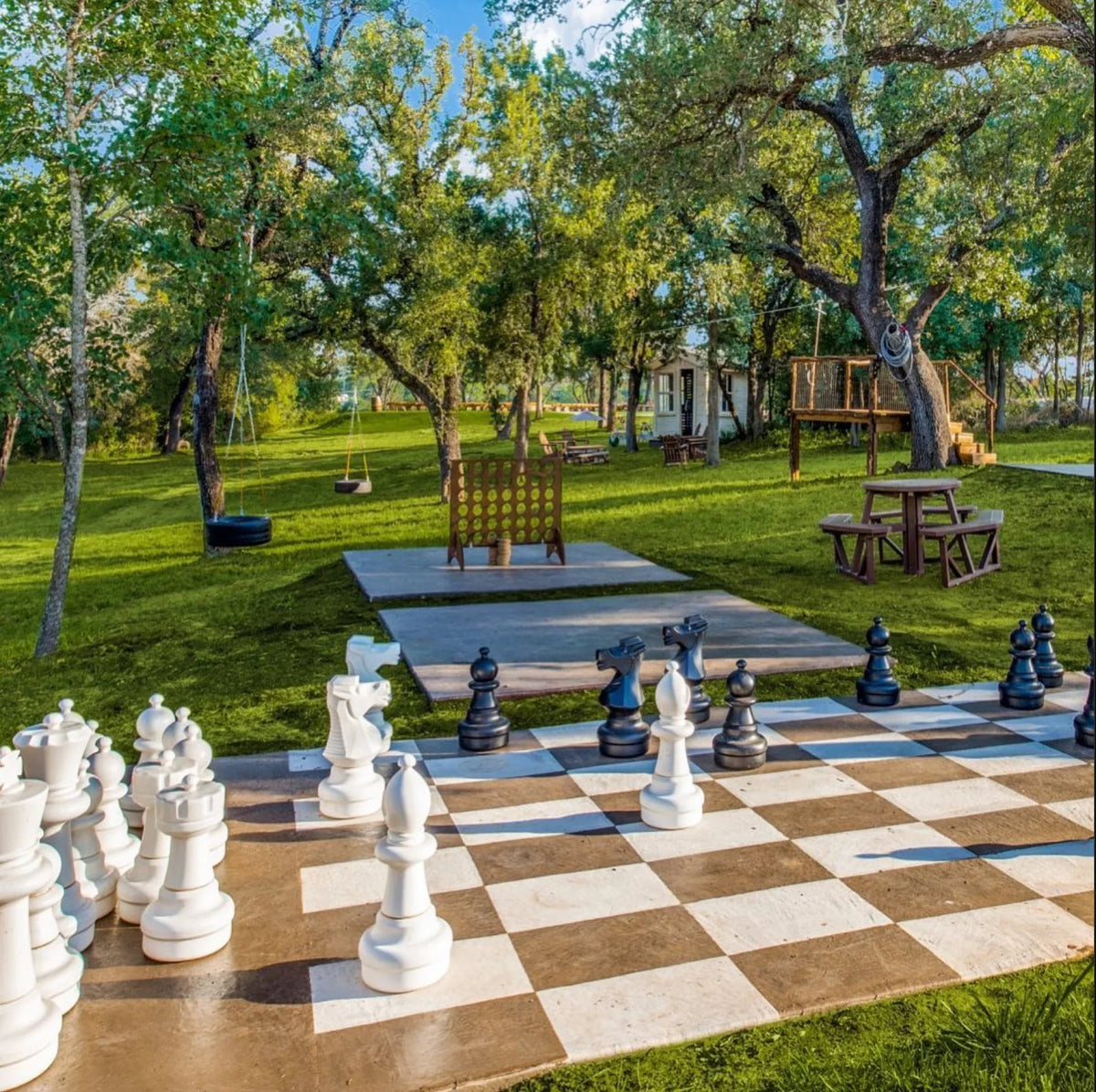
Giant Chess Parks
Giant chess parks attract attention while offering thoughtful, strategic play. Their large scale makes chess approachable and visually engaging for all ages. With proper layout, seating, and lighting, they often become memorable landmarks that draw repeat visitors.
RELATED: Learn more in our free downloadable Chess Park Design Guide
How to Build a Giant Chess Set in a Park

Designing a successful life-size chess area is part art, part geometry, and part long-term planning. You need the right location, the right surface, the right set size, and a clear plan for how people will sit, move, and store the pieces. With a little upfront thinking, a chess park can turn an overlooked corner or plaza into a lively, interactive zone that still feels calm and ordered.
The following steps walk through those key decisions in a logical order so you can avoid common mistakes and costly re-work later.
Select Location and Layout
Start by choosing a spot that’s both visible and practical. For public parks, it’s smart to place the board near natural foot-traffic routes; close enough to paths, plazas, or a pavilion that people notice it without feeling crowded.
Ensure:
-
Ground is level and well-drained
-
Ground has space for at least a 12' x 12' area for smaller sets, and up to 20' x 20' (or more) for larger installations
-
Space has a clear walkway of about two feet on all sides
Most importantly, double-check the classic “light square on the right” rule before anything is built: when a player stands at each side, the near-right corner square must be a light color, or the entire playing surface will be oriented incorrectly.
Choose Board Type
Next, decide whether your chessboard should be permanent or portable, based on how the space will be used over time. Permanent boards are ideal for parks, plazas, schools, resorts, and courtyards where chess is a long-term feature. Portable boards work better in multi-use lawns, event spaces, or places where you’re still testing location and demand.
Common options include:
-
Concrete or Pavers: Durable, low-maintenance surfaces that stand up to heavy public use.
-
Stained or Painted Concrete: Simple slabs marked in alternating colors with non-slip coatings for an easy-to-clean solution.
-
Tile or Stone: High-end look using ceramic, porcelain, or natural stone for resort-style or civic installations.
-
Grass and Stone Mix: Alternating turf and stone squares that blend into more natural or garden-style landscapes.
-
Modular Hard Boards: Interlocking plastic or wood tiles that create a rigid surface and can be disassembled for storage.
-
Roll-Up Mats: Flexible vinyl or heavy-duty fabric boards that can be rolled out on demand and packed away when not in use.
Think about your budget, climate, and maintenance capacity as you compare these choices. A permanent concrete or paver board might cost more upfront but require very little attention, while a portable mat is inexpensive and flexible but depends on staff to set up and take down correctly.
Size Board and Pieces
A giant chessboard only works well when the board and piece sizes match. The basic rule: the square width should be roughly half the height of the king. That proportion keeps pieces stable, easy to move, and visually balanced.
For board size, consider:
-
Small Patios or Corners: 24" kings with 12" squares and a board around 8' x 8'.
-
Medium Community Spaces: 36" kings with 18" squares and a board around 12' x 12'.
-
Signature Installations: 48" kings with 24" squares and a board around 16' x 16'.
Once the board footprint feels right, choose the pieces themselves based on who will be playing:
-
Family-Friendly Spaces: Plastic sets around 24-36" tall that are lighter, durable, and easy to clean.
-
Premium Destinations: Teakwood or LED sets that add more “wow” factor for resorts, malls, and high-profile plazas.
-
Heavy-Use Public Parks: Weatherproof Perfect sets that can handle weather, frequent play, and occasional rough treatment.
Always factor in who will move the pieces. If many users are younger children or older adults, aim for sets where the queen weighs under 20 pounds, and the squares don’t require large steps between them. Getting this balance right makes the board inviting instead of intimidating and supports regular, safe use.
Plan Seating and Comfort

A chess park is as much about watching and relaxing as it is about playing. Place sturdy benches or chairs centered at each end of the board so players can sit and think between moves, leaving enough space behind them for people to walk past. Add staggered seating behind or slightly to the sides for spectators who want to follow the game without crowding the board.
Also, consider incorporating shade structures, trees, or umbrellas to reduce glare on the pieces and make the area usable in hot weather, and nearby small tables with regular-size boards for players waiting their turn.
Prepare Storage and Care
Finally, decide where the pieces will live when they’re not in use. For public parks, this might be a lockable shed, a weather-resistant storage bench, or marine-style dock boxes that double as seating. Make sure there’s enough room to store all 32 pieces without awkward stacking and that staff can lift and carry them safely from storage to the board.
Simple touches like labeling storage spots for each piece, planning a level path between storage and the board, and choosing weather-resistant sets can dramatically reduce damage and loss. A basic cleaning and inspection routine, such as wiping down pieces, checking for cracks, and sweeping the board, keeps the chess park looking fresh and welcoming for years.
How MegaChess Supports Thoughtful Park Design
MegaChess has spent decades helping parks, schools, resorts, and cities turn empty corners into engaging play spaces built around giant chess. Instead of just selling pieces and walking away, our team helps you think through orientation, surface choices, set size, seating, storage, and long-term maintenance so your project works in the real world, not just on paper.
Because we offer a wide range of materials and configurations, it’s easy to match your climate, budget, and design style, from simple outdoor-rated plastic sets for high-use public areas to premium teak or LED sets for destination sites. As a trusted seller of giant chess sets, we can also provide sample layouts, photos of similar projects, and practical advice learned from hundreds of previous installations, helping you avoid common mistakes and get more value from your investment.
Final Words on Bringing Community-Focused Park Designs to Life

Thoughtful park design is about more than picking a few features from a catalog. It’s about listening to residents, planning for different ages and abilities, and layering flexible spaces, shade, paths, art, sports, and play into one coherent layout. Simple neighborhood park improvement ideas, like adding loop paths, shaded seating, or a single interactive feature, can spark a surprising amount of daily use.
Giant chess parks fit naturally into this bigger picture, offering a strategic, visually striking activity that works across generations and blends well with other amenities. If you’re ready to turn your design ideas into something people can actually enjoy, explore MegaChess’s giant chess sets and boards, or contact us today for help with choosing the right solution for your park and budget.
FAQs About Community Park Ideas
What's essential for small urban parks?
Small urban parks benefit most from focused features, layered seating, and strong community engagement in park design so that every square foot reflects real local needs and gets regular use.
How do you balance active vs. quiet areas?
You can balance energetic and calm zones by grouping louder activities, buffering them with paths and planting, and placing quieter park amenities like seating, gardens, and reading nooks slightly away from courts and play structures.
What ideas involve easy-to-low-maintenance installations?
Low-maintenance options include open lawns, simple walking loops, basic benches under shade trees, and durable concrete or paver chessboards paired with weather-resistant giant sets that only need occasional cleaning.