
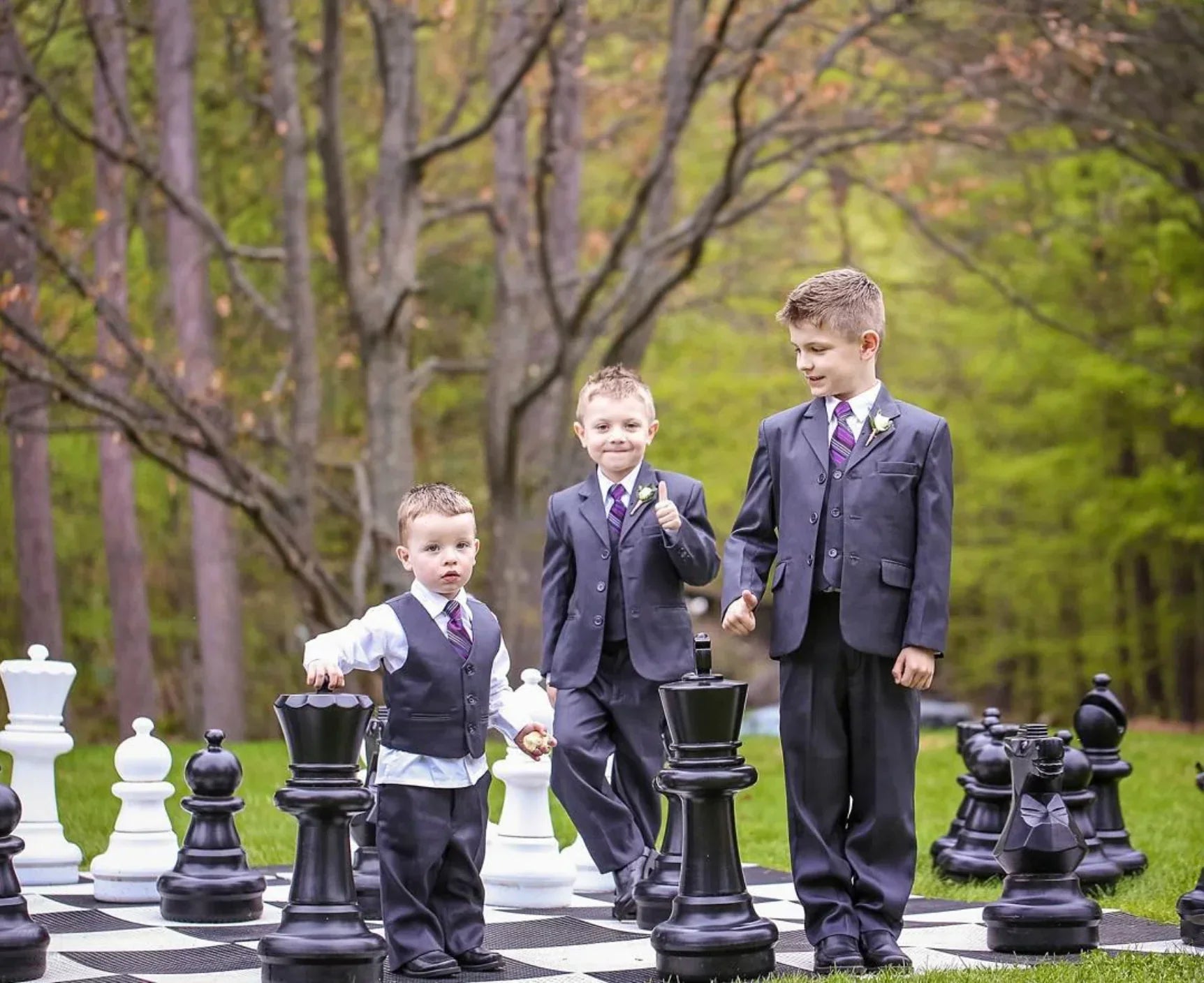
Chess is a recognized STEM activity, grounded in mathematics, logical reasoning, and structured problem-solving. Research confirms that chess instruction measurably improves academic performance in children, and educators around the world have integrated it into formal curricula. Many schools are finding that a giant chess set makes this connection even more powerful, turning abstract strategy into a hands-on, full-body learning experience that students can gather around.
This article shows exactly how chess builds STEM skills, what the studies actually say, and how to launch a chess program at your school, library, or community space, including how giant chess sets fit into that plan.
Is Chess a STEM Activity? Yes! Here's Why
Every move in chess is a math problem: probability assessed, geometry applied, logic chained forward. Chess is based on mathematics, spatial reasoning, and logical systems, the same cognitive foundations that anchor science, technology, engineering, and math education. Formal recognition has followed: chess appears in STEM expos, school curricula worldwide, and structured academic programs at every grade level. This isn't a fringe claim. Researchers have studied it, schools have adopted it, and the results hold up.
How Chess Enhances STEM Skills: The Core Connections

Chess enhances STEM skills across four distinct areas, each tied to specific mechanics of the game:
-
Coordinate systems and spatial reasoning: The knight's L-shaped move maps directly onto coordinate grids, using the same logic students use in geometry and graphing.
-
Angle relationships: Bishop diagonals demonstrate how pieces move along consistent angles, reinforcing concepts taught in geometry classrooms.
-
Conditional logic: Pawn promotion introduces an if-then structure: if a pawn reaches the back rank, a new outcome becomes possible. This is the same logic that underlies conditional statements in math and computer science.
-
The engineering design process: Players design strategies under real constraints, test them against an opponent, and adapt when they fail; the same plan, build, test, revise cycle used in engineering.
These aren't loose analogies; they're precise parallels to concepts taught in math and science classrooms.
Academic transfer is not just theoretical. Research published in ScienceDirect, analyzing 40 studies, found that chess instruction yields a meaningful overall effect size of g = 0.338 on children's cognitive and academic skills, confirming that the structured reasoning developed through chess translates into measurable academic outcomes.
What the Research Says About Chess and Academic Performance
A quantitative study from the University of West Florida found that participation in chess has a measurable positive impact on third-grade students' mathematics achievement scores. Structured chess instruction moved the needle for students who wouldn't otherwise stand out.
Academic researcher M. Krishnamurthy adds: "Chess can reduce stress around exam time and help increase concentration in studies, while students can enjoy the social and intellectual atmosphere it offers." That matters because math anxiety affects a significant portion of students. Chess helps kids make STEM learning fun by reducing the pressure of a formal test environment.
Chess introduces STEM, STEAM, and 21st-century skills in ways countries have taken seriously at a national level. Estonia, Finland, China, and South Korea have all integrated chess into national school curricula as part of their broader STEM competitiveness strategy. This is a mainstream educational tool, not an experimental one.
Why Giant Chess Sets Make STEM Learning Stick for Kids

Can chess enhance STEM skills even more when the pieces are life-sized? Definitely! Physical, oversized chess changes how kids engage with the game, and why chess is great for kids goes beyond the strategy: a child who resists a worksheet will walk across a lawn to push a piece as tall as their waist. Large-scale physical objects activate kinesthetic engagement that a screen or worksheet cannot replicate.
Libraries have seen this firsthand, as chess in educational libraries like Pasadena High shows how a giant set transforms a quiet room into an active learning space.
MegaChess Plastic sets are built for this kind of setting: durable, weatherproof, and suited for high-traffic outdoor use.
How to Start a Chess Program at Your School or Library
If you're wondering how to start a chess program without a budget or specialist, the barrier is lower than it looks. Three steps get it moving.
Make It Visible First
A giant chess set in a common area signals that chess is open to everyone, not just "chess kids." Schools, libraries, apartment complexes, and HOAs have used outdoor sets this way, creating organic discovery through shared space rather than scheduled programming. MegaChess Plastic sets range from an 8" King to a 49" King, with entry prices starting at $69, making it practical to start small and scale up.
Connect Moves to Existing Lessons
Teachers don't need to overhaul anything. A 15-minute Knight Coordinate Challenge maps directly to a math lesson on grid systems. Chess as a tool for teaching STEM skills works best when it reinforces what students already encounter in class.
Use Free Frameworks
ChessKid, Chess.com for Schools, and Science Olympiad's chess events, which reach 5,500 teams at 400 tournaments across all 50 states, provide ready-made structures. A portable setup like the Quick Fold Nylon Giant Chess Mat can be deployed in a hallway, courtyard, or library commons within minutes.
Chess programs don't need to start big; they need to start being visible. The research supports the investment, the implementation is straightforward, and the barrier to entry is lower than most educators expect.
Final Words on Giant Chess Sets for STEM Learning

Chess isn't just an enrichment activity; it's a legitimate STEM tool that builds real math, logic, and problem-solving skills, and giant chess sets make that connection tangible by turning abstract strategy into something kids can walk into and physically move pieces around.
Starting a program doesn't require a specialist or a big budget, just a visible, accessible setup. As a trusted seller of giant chess sets, we make it easy to bring this kind of hands-on learning to your school, library, or community space; browse our collection and choose the perfect oversized chess set for your space today!