
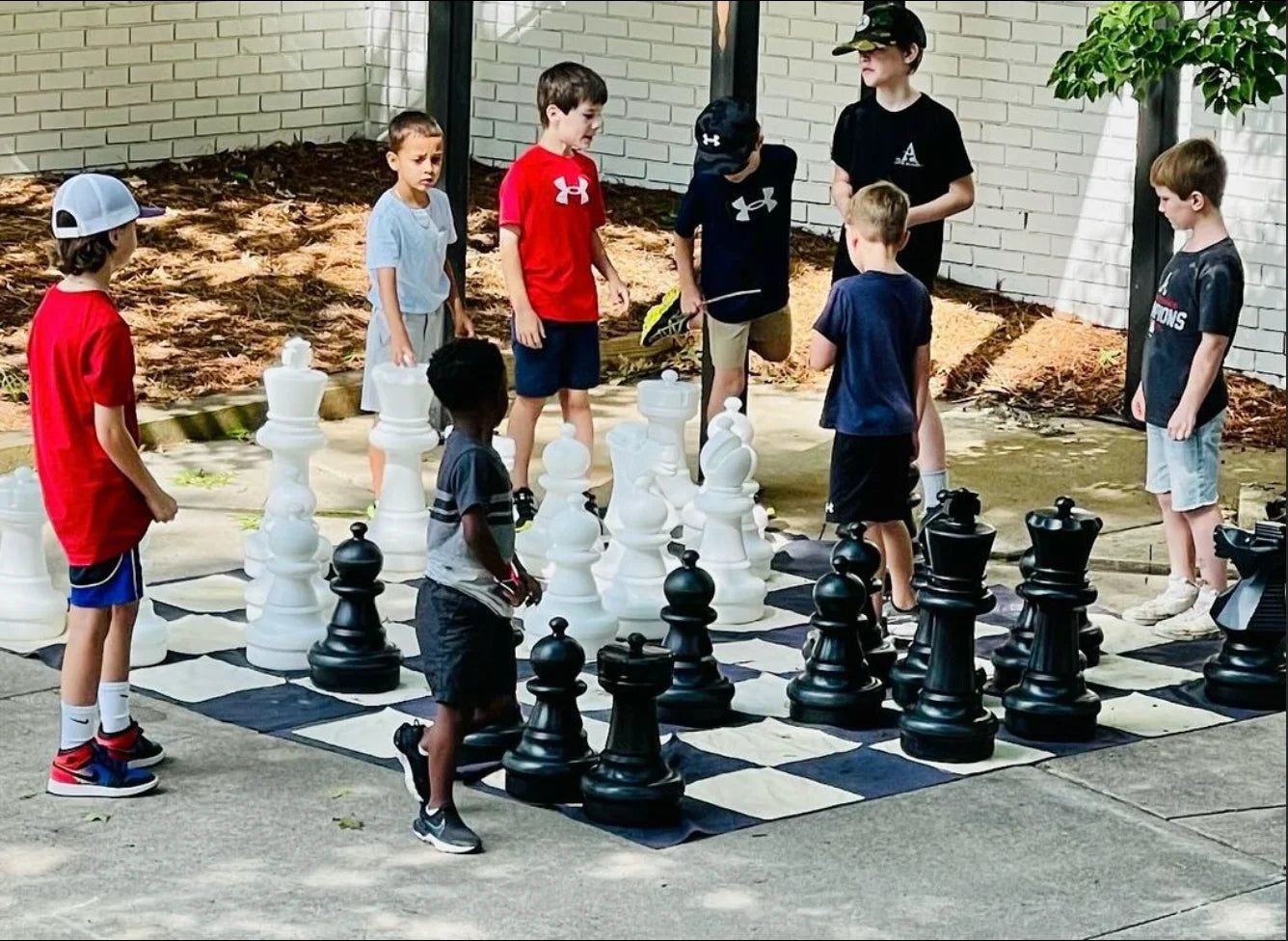
The best field day games mix high-energy relays, a few water stations, and at least one slower-paced challenge, so every student finds something they are excited to play. A good rotation gives sprinters a chance to show off, gives quieter kids a station where thinking matters more than speed, and keeps every grade moving without long waits between turns. It's also a rare chance to help kids hit their recommended 60 minutes of daily activity in one go, especially those who'd rather sit out gym class.
Whether you are a PTA volunteer building a spring lineup or a PE teacher refreshing an old list, these field day activities cover every age group, every energy level, and every budget, and the list below is organized so you can build a rotation instead of just picking games one at a time.
Classic Field Day Games Elementary Schools Rely On
These games need almost no setup, and they still get the loudest cheers year after year. Most require only items already sitting in a supply closet or a Dollar Store bag.
-
Sack race using pillowcases or feed sacks
-
Three-legged race with bandanas or old socks for ties
-
Tug of war with a length of rope and two evenly matched teams
-
Egg and spoon race using plastic eggs so nothing breaks
-
Balloon pop relay where kids sit on a balloon until it pops
-
Parachute popcorn with a play parachute and foam balls
Water Games for Hot Weather Field Days
Water stations are what kids remember most, and they work best scheduled toward the middle or end of the day, once the sun has had time to warm things up. Keep towels nearby and warn families ahead of time so kids come dressed to get wet.
-
Water balloon toss with partners stepping back after each catch
-
Sponge relay where teams race a soaked sponge down the line
-
Car wash relay squeezing a wet sponge into a cup at the finish
-
Fill the bucket relay carrying water cup by cup to a team bucket
Relay Races and Team Challenges for Grades 3 to 8
Older students want a challenge that takes some coordination, not just speed. These games slow the pace just enough to keep things interesting without losing the energy of a relay.
-
Golf ball bowling using recycled bottles as pins
-
Hula hoop ring toss over a mix of small and large cones
-
Pizza box relay carrying an empty box without letting it drop
-
Plunge run scooping water across a court with a toilet plunger
-
Crab soccer moving the ball while walking crab style
-
Pool noodle hockey using cut noodles as sticks around a beach ball
Where Giant Lawn Games Fit Into Your Field Day Lineup

Every field day needs at least one station where the pace drops and strategy takes over, and that is exactly the gap oversized lawn games fill. Games like these give teachers a low-supervision station, since the game itself sets the pace rather than requiring constant refereeing.
-
A giant chess set turns a quiet corner of the field into a spot where two students face off using pieces they can actually stand next to, drawing a crowd even from kids who aren't playing
-
A giant checkers board works the same way for younger grades who aren't ready for chess rules yet
-
A Giant Tumble Tower station adds a physical challenge that still rewards a steady hand over raw speed
Boards are always sold separately from the pieces, so schools can pair a set with a mat, tile, or an existing blacktop grid depending on the space they have to work with. Many PTA groups also lean on the two-week rental option for a single event instead of buying a set outright, which keeps the budget in line with a one-day field day.
For schools building a permanent activity corner rather than a single event, MegaChess offers giant chess sets built for school playgrounds, sized for everything from a kindergarten courtyard to a middle school gym.
Add-On Stations That Round Out the Day
A few extra stations give kids somewhere to go between the bigger games and give volunteers a lighter station to run. None of these need much setup, and most schools already have the supplies on hand or can borrow them from a nearby PTA group.
-
Face painting or temporary tattoo table
-
Bubble station with wands and a few tubs of solution
-
Sidewalk chalk area for a quick game of hopscotch
-
Cool down tent with coloring pages for kids who need a break
-
Popsicle or snow cone cart near the finish line
Setting Up a Field Day Rotation That Actually Runs on Time
Games only work if the schedule around them holds up, and that comes down to station count and volunteer coverage more than the games themselves.
Plan for eight to twelve stations
A rotation of eight to twelve stations works well for a half-day event. That gives each grade enough time per stop without long waits, especially when every station has one volunteer running it and a clear sign explaining the rules.
Keep loud stations apart
Group high-energy games like relays and water stations away from each other so noise and puddles do not overlap. Place a slower station, such as a giant chess set or a craft table, between two loud ones so volunteers and students both get a breather.
Recruit volunteers early
Line up volunteers a few weeks ahead, not the week of. That gives you time to fill every station and set a backup for the ones that need the most supervision, like water games.
Make Your Field Day Worth Remembering

Field day comes down to one thing: giving every kid, fast or slow, loud or quiet, a station where they get to shine. Mix a few classics with a water game, then add one slower-paced station where strategy beats speed for once. That's the lineup families talk about at pickup for weeks.
As a seller of giant chess sets, we can help you find the right size set or lawn game rental for your school, or you can browse our site to build out your full lineup. Purchase one of our giant chess sets or browse our most popular options today!
FAQs About Field Day Ideas
What is the best field day game for young children?
Simple, low-rule games work best for kindergarten through second grade. Parachute popcorn, balloon relays, and a giant checkers station all let young kids join in without needing to understand complicated instructions first.
How many field day activities should a school plan?
Most half-day elementary field days run smoothly with eight to twelve stations, mixing relays, water games, and at least one or two slower stations so the day doesn't run at the same pace.
Can field day games work indoors on a rainy day?
Yes. Relay games can move into a gym with tape marking the lanes, and stations like a giant chess set or checkerboard work just as well indoors as outside, making them a useful rain-day backup.
How do you keep a field day station running without constant supervision?
Pick games with simple, self-enforcing rules so students can play a full round without a volunteer stepping in after every move. A giant chess set works well because the board keeps the game on track, and a volunteer only needs to check in between matches rather than referee every turn.

 Powered by goodChatBot